6 Key Steps to Create Flash USDT Safely and Effectively
· based on the channel Rca FastPrint
Flash USDT is a method to create USDT-like tokens quickly using blockchain development tools and smart contracts. This approach relies on the ERC20 standard on Ethereum or compatible networks and requires a development environment such as ChainIDE and a wallet like MetaMask for interaction. You can find the official ChainIDE script and detailed guidance at defiflashusdt site.
What Is Flash USDT and How It Works
Flash USDT refers to a method of generating USDT tokens instantly by deploying a custom ERC20 smart contract. Unlike official USDT issued by Tether, Flash USDT tokens are created using developer tools for educational, testing, or experimental purposes. The process involves writing a smart contract that follows the ERC20 token standard, deploying it on an Ethereum-compatible blockchain, and interacting with it through a wallet interface such as MetaMask.
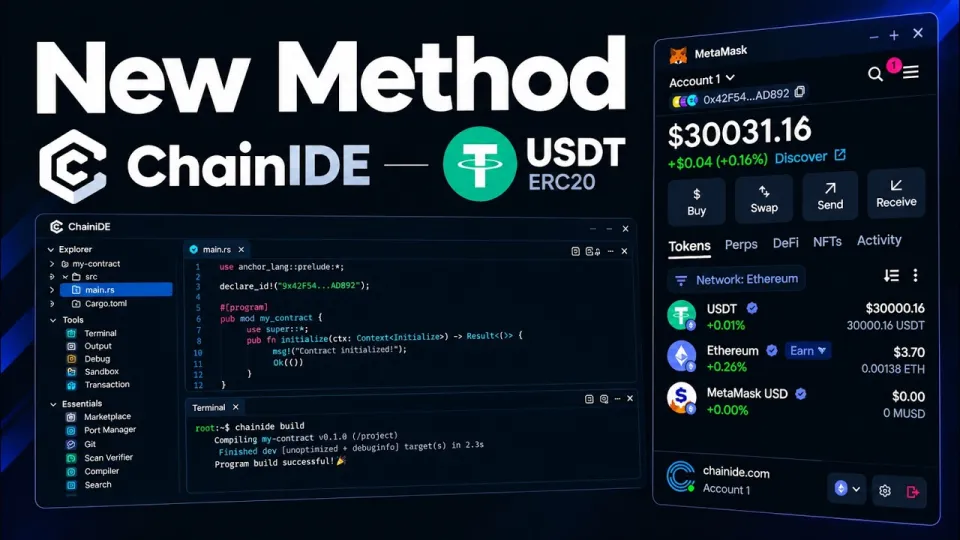
Video: How to Make Flash USDT | Working Method 2026
Setting Up ChainIDE for Flash USDT Creation
ChainIDE is a cloud-based integrated development environment designed for blockchain smart contract development. To create Flash USDT, you start by opening ChainIDE and loading the provided ERC20 token script. This script outlines the token's parameters like name, symbol, and total supply. The environment supports Solidity programming language and offers compilation, deployment, and testing features all in one place. Setting up ChainIDE correctly includes:
- Creating a new Solidity project.
- Importing the Flash USDT ERC20 contract code.
- Compiling the contract to check for errors.
- Preparing deployment to a test or main Ethereum network.
Connecting MetaMask and Interacting with the Flash USDT Contract
MetaMask is a browser wallet that allows users to manage Ethereum addresses and sign transactions. After deploying the Flash USDT contract via ChainIDE, you connect MetaMask to the same Ethereum network where the contract is deployed. This connection enables you to:
- View the token balance of your wallet.
- Transfer Flash USDT tokens.
- Interact with contract functions like minting or burning tokens.
To connect MetaMask:
- Open MetaMask and select the correct network (Ethereum mainnet or a testnet).
- Import your wallet or create a new one.
- Link MetaMask to ChainIDE deployment by using the deployed contract address.
Understanding ERC20 Token Structure for Flash USDT
The ERC20 token standard defines how tokens behave on Ethereum. Key components in the Flash USDT ERC20 contract include:
- `name`: The token's full name (e.g., "Flash USDT").
- `symbol`: The token symbol (e.g., "fUSDT").
- `totalSupply`: The total number of tokens minted at deployment.
- `balanceOf`: A mapping that tracks token balances per address.
- `transfer`: Function to send tokens to another address.
This structure ensures compatibility with wallets and exchanges that support ERC20 tokens. Understanding these elements helps users verify token authenticity and functionality.
Testing and Verifying the Flash USDT Setup
Before using Flash USDT with real funds, thorough testing is critical. This includes:
- Deploying the contract to a testnet like Ropsten or Goerli.
- Checking the contract address matches the verified source.
- Confirming token transfer operations work as expected.
- Avoiding interaction with unknown or unverified contracts on mainnet.
Testing prevents losses caused by bugs or malicious contracts. Always review the source code and transaction details carefully before any real asset transfer.
Common Mistakes to Avoid When Creating Flash USDT
Many errors occur when creating or interacting with Flash USDT tokens. Common pitfalls include:
- Sending real funds to unverified or suspicious contracts.
- Using the wrong Ethereum network in MetaMask.
- Overlooking contract address verification.
- Ignoring gas fee estimations leading to failed transactions.
Following best practices and double-checking each step ensures a safe experience.
Useful Links
- Official Flash USDT ChainIDE Script and Guide: https://sites.google.com/view/defiflashusdt
Conclusion
Creating Flash USDT tokens involves understanding ERC20 smart contracts, using ChainIDE for development, and MetaMask for wallet interactions. The process requires careful testing and security checks to avoid losses. For a detailed walkthrough and script resources, visit the official defiflashusdt site. This article is based on the educational content provided by the channel Rca FastPrint, which specializes in crypto tutorials and blockchain development methods.
Key takeaways
- Flash USDT is an ERC20 token created via smart-contracts on Ethereum-compatible networks.
- ChainIDE and MetaMask are key tools for developing and interacting with Flash USDT.
- Smart-contract testing and verification prevent loss of real funds.
- Flash USDT creation involves coding, deploying, and managing ERC20 tokens.
- Understanding wallet interfaces and network details is essential for safe use.
Questions & answers
What is Flash USDT and how does it differ from official USDT?
Flash USDT is a custom ERC20 token created via smart contracts for educational or testing purposes, unlike official USDT issued by Tether. It mimics USDT functionality but is not backed by real assets.
Which tools are necessary to create Flash USDT?
To create Flash USDT, you need a smart contract development environment like ChainIDE and a wallet such as MetaMask to deploy and interact with the token on an Ethereum-compatible blockchain.
Is it safe to use Flash USDT tokens in real transactions?
Flash USDT tokens are intended for testing and learning. Using them in real transactions is risky unless the contract is verified and audited. Always avoid sending real funds to unknown contracts.
How can I verify the Flash USDT contract before interacting?
Verify the contract address, review the source code, ensure it follows ERC20 standards, and test on a testnet before using it on mainnet. This reduces the risk of scams or errors.
Source: How to Make Flash USDT | Working Method 2026 · Markdown version