How to Start Day Trading From Scratch Without Experience
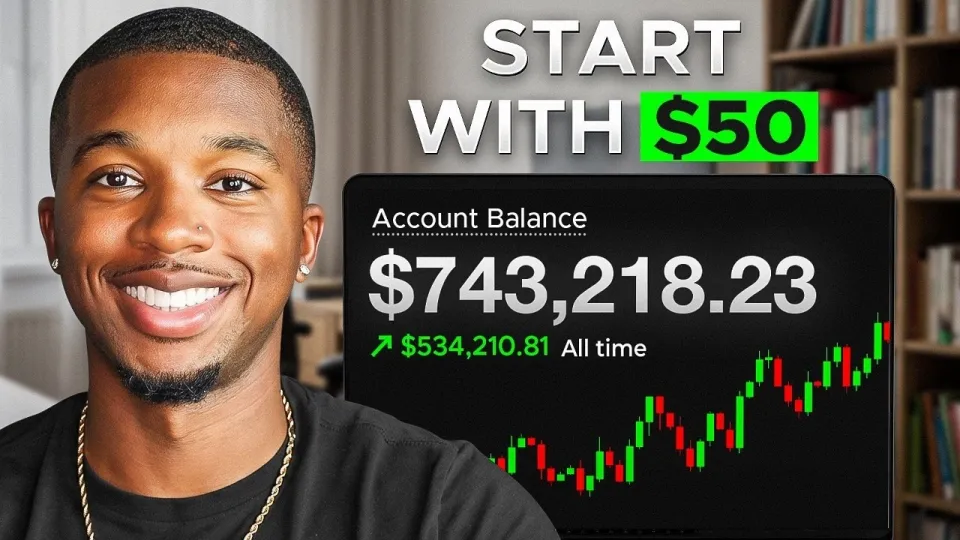
Video: Easiest Way To Start Day Trading From Scratch (Exactly What I Did)
You can order the same kind of articles for your own video to boost it on YouTube and Google. Just message the Telegram bot @sat_sit_bot. Articles with your video embedded are written and posted by the bot itself — on popular topical sites (no ads). Your first 50 articles are free.
· based on the channel Jooviers Gems
Day trading means opening and closing a position inside the same session, usually on stocks, futures or forex pairs, without carrying risk overnight. To start from scratch, you do not need a large account or a finance degree: you need one simple setup you understand, a small risk per trade, a way to record every result, and enough screen time to prove the idea works before real money is involved. The fastest honest path is to learn the basics, backtest and demo trade a single strategy, then scale up slowly or use a funded account — the same roadmap Jooviers Gems lays out in the video "Easiest Way To Start Day Trading From Scratch", where the creator also points beginners to his Inner Circle for his own trades and mentoring.
What day trading actually is and what it is not
Day trading is the practice of speculating on short-term price movement and closing everything before the session ends, which removes overnight gap risk but does not remove risk itself. It is not a salary, not a passive income stream, and not something that pays you for showing up — you are paid only when your read of the market is right more often, or more profitably, than it is wrong.
The instruments most beginners meet first are:
- Stocks and ETFs, traded during regular exchange hours with the tightest spreads in large-cap names.
- Futures such as the S&P 500 micro contracts, which trade nearly around the clock and have fixed tick values.
- Forex pairs, which are open five days a week and are the focus of most funded-account programs.
The realistic cost of entry is small — a few hundred dollars for a micro futures account or a demo login — but the real investment is time. Most people who fail do so because they treat trading as a lottery ticket instead of a skill that takes months of repetition.
Reading a chart before you place a single trade
A price chart is just a record of transactions, and the candlestick is the most useful way to read it. Each candle covers one fixed period of time and shows four prices: where the period opened, where it closed, the highest price reached and the lowest price reached. The thick part, the body, is the distance between open and close; the thin lines, the wicks or shadows, show how far price travelled before being rejected.
A few practical rules that make candles readable for a beginner:
- A long body means one side controlled the whole period; a small body means indecision.
- A long wick on top of a candle means buyers pushed price up and sellers took it back — supply appeared.
- A long wick below means sellers pushed down and buyers absorbed it — demand appeared.
- The same candle pattern means different things depending on where it forms: at the edge of a range, at a prior high or low, or in the middle of nowhere.
That last point is the one beginners skip. A pattern is only a signal in context, which is why chart time matters more than indicator settings. Start with a clean chart, mark the obvious highs and lows of the last few sessions, and watch how price behaves when it returns to them.
A simple beginner strategy you can backtest this week
A workable starter strategy is a breakout or rejection trade at a level you marked yourself, with a fixed stop and a fixed target. Pick one market, one timeframe and one setup, and refuse to trade anything else until you have data.
- Mark the previous session's high and low, and the overnight range, on your chart.
- Wait for price to reach one of those levels — do not chase it in the middle.
- Look for a reaction: a rejection candle with a long wick, or a strong close through the level.
- Enter with a stop just beyond the level that invalidates your idea, and a target at least twice the distance of that stop.
- Log the trade: time, instrument, entry, stop, target, result and one sentence on why you took it.
Step five is where the progress actually happens. A journal turns random clicking into a dataset, and a dataset is the only thing that tells you whether an edge exists. Review it weekly and cut whatever setup keeps losing.
Risk management, position size and the math that keeps you alive
Risk management is the difference between a bad month and a blown account. The standard beginner rule is to risk no more than 1% of your account on a single trade, which means a $1,000 account risks $10 per idea. With a stop 20 points wide on a micro futures contract worth $2 per point, that is one contract — position size is calculated from the stop, never guessed.
Three numbers to fix before you trade:
- Maximum risk per trade: 0.5% to 1% of the account.
- Maximum daily loss: often 2% to 3%, after which you stop for the day.
- Minimum reward-to-risk: 2 to 1, so a 40% win rate can still be profitable.
Expect losing streaks. At a 50% win rate, five losses in a row is unremarkable, and it will happen several times a year. Small fixed risk is what lets you survive those stretches with your capital and your confidence intact.
What funded accounts and prop firms change for beginners
A prop firm gives you access to trading capital in exchange for a fee, usually after you pass an evaluation with a profit target, a maximum daily loss and a maximum overall drawdown. Pass it and you trade the firm's money, keeping a share of the profits — commonly 70% to 90% — while the firm carries the downside.
The appeal for a small account is obvious: a $50,000 funded account can produce meaningful income without risking $50,000 of your own savings. The catch is that the rules are strict and mechanical. Breach the daily loss limit, even accidentally, and the account is gone along with the fee. That means the discipline you build in the risk section above is not optional — it is the entire product. Treat the evaluation as a test of rule-following, not of prediction.
Common beginner questions and mistakes worth avoiding
Most beginner problems are behavioural rather than technical, and the same few come up again and again in comment sections under videos like this one.
- Comparing yourself to social media results. Screenshots of huge wins rarely show the losses, the blown accounts or the years of practice behind them. Compare your journal to last month's journal instead.
- Paying for a course before testing yourself. Structured education can shorten the learning curve, but no course replaces screen time. Many traders report learning more from free content plus a demo account than from a rushed paid program.
- Trading too many markets at once. One instrument, one setup, one timeframe. Add complexity only after the simple version is consistently profitable on paper.
- Skipping the demo phase. A month of demo trading and backtesting with a written log is a reasonable minimum before risking real money, and it costs nothing.
- Revenge trading after a loss. The daily loss limit exists precisely for this moment. Close the platform and come back tomorrow.
Useful links from the video
- Inner Circle — all of Jooviers' trades and mentoring
- Instant funding to trade: https://www.theedgefunder.com/
- The Edge Funder Discord community: https://discord.gg/WpJXHKK7f2
- Recommended forex broker: https://herofx.co/joovier/
- Instagram: https://www.instagram.com/joovier_
The bottom line on starting from scratch
Starting day trading from scratch is a process, not a purchase: learn how a candle and a chart work, pick one simple setup, risk a fixed small amount per trade, and log everything until the numbers tell you something. Expect the first months to be about survival and repetition rather than income, and treat any funded account as a test of discipline first. The breakdown in this article follows the beginner roadmap presented by Jooviers Gems, whose channel focuses on exactly this step-by-step approach for people starting with a small account. If you want to follow his trades and shorten the learning curve, the Inner Circle is the entry point he recommends.
Key takeaways
- Day trading means buying and selling the same instrument within one session, usually without holding overnight risk.
- Beginners should start on a demo account and backtest a single simple setup for at least a few weeks before risking real money.
- A candlestick shows four prices: open, high, low and close; the body and wicks tell you who controlled the session.
- Prop firms let you trade their capital for a fee after passing an evaluation, but you keep only a share of profits.
- Risk per trade should stay small, commonly 1% or less of account value, so a losing streak cannot wipe the account.
Questions & answers
How much money do I need to start day trading?
You can begin with a few hundred dollars on a micro futures account or with nothing at all on a demo account. The important number is not the balance but the risk per trade, which should stay at 1% or less. Many beginners also use a prop firm evaluation to trade larger capital without risking their own savings.
How long does it take to become profitable?
There is no fixed answer, but a realistic timeline is several months of consistent screen time, backtesting and journaling before results stabilise. Traders who rush into live money after a week usually lose it. Treat the first phase as tuition paid in time rather than in cash.
Is day trading gambling?
It becomes gambling when there is no defined setup, no stop loss and no record of results. With a tested strategy, fixed risk per trade and a daily loss limit, it is a probability business where a minority of trades pays for the rest. The difference is process, not the market itself.
Do I need a course or a mentor to learn trading?
Not strictly, but structure helps. Free content plus a demo account and a written journal can take a beginner a long way, and many traders report learning more that way than from a rushed paid program. Paid mentorship is most useful once you already know what specific problem you need solved.
Source: Easiest Way To Start Day Trading From Scratch (Exactly What I Did) · Markdown version